Wait 30 minutes after eating or drinking before taking your temperature by mouth, advises Mayo Clinic. MedlinePlus gives a 20-to-30-minute interval after food, smoking, or hot or cold liquids. For an ordinary home check, giving your mouth the full half hour is a simple way to avoid measuring the aftermath of your tea.
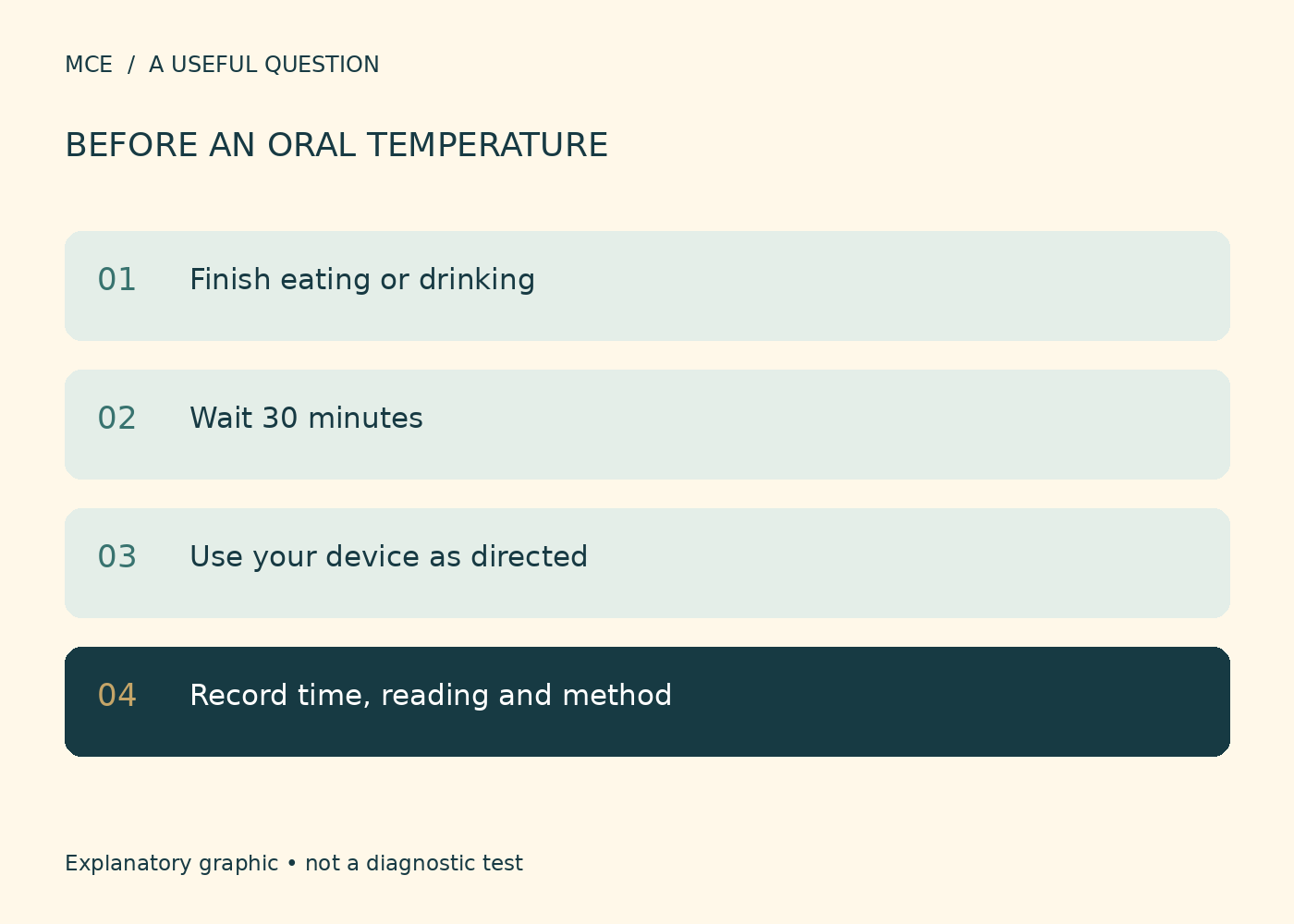
Original MCE explanatory graphic. The 30-minute interval applies after eating or drinking before an oral measurement.
A thermometer looks reassuringly exact. It supplies a number, often with a decimal point, and makes a decisive little beep. But a precise-looking display cannot compensate for a measurement taken under the wrong conditions.
Give the number a fair start
Use a digital thermometer intended for oral measurement and read its instructions. Clean it before and after use according to the device guidance. Place the tip under your tongue, close your mouth, and wait for the device’s completion signal or specified time. An oral thermometer and a rectal thermometer should be separate and clearly labeled.
If you have just finished a hot bath or heavy exercise, that matters too. MedlinePlus recommends waiting at least an hour afterward. These are instructions for obtaining a routine reading, not a reason to postpone medical help when you feel seriously unwell.
The useful question is not just “What number did I get?” It is “What did I actually measure, and under what conditions?”
Write down more than the decimal
Make a short note with the reading, the time, and where you measured it: mouth, ear, forehead or armpit. Include symptoms and the name and time of any fever-reducing medicine you have taken. Do not stop or delay prescribed treatment simply to manufacture a more impressive temperature reading.
Here is an example of the format, with no diagnostic meaning attached: “8:10 a.m.; oral digital thermometer; last drink 7:30; sore throat since yesterday.” The point is to supply context that you will otherwise have to reconstruct during a phone call.
Normal temperature varies between people and across the day. Different measurement sites also produce different readings. Tell a clinician which method you used rather than silently adding or subtracting a degree to make the numbers match.
A temperature is one piece of information about how you are doing. A reassuring number does not cancel concerning symptoms. If you are unsure what a reading means for your situation, ask your healthcare professional.
Meanwhile, put the tea down, note the time, and let the thermometer have a fair chance at answering the question you actually asked.
Keep exploring
Sources and image credit
MCE Research & Publishing. Original explanatory diagram, November 24, 2026.
Original diagram based on the sources listed below.