If you are 45 or older, a floppy disk may belong to your working life rather than your idea of ancient history. The Smithsonian collects them. IBM began selling floppy disk drives in 1971. A tool you once carried between desks now sits comfortably inside the story of computing.
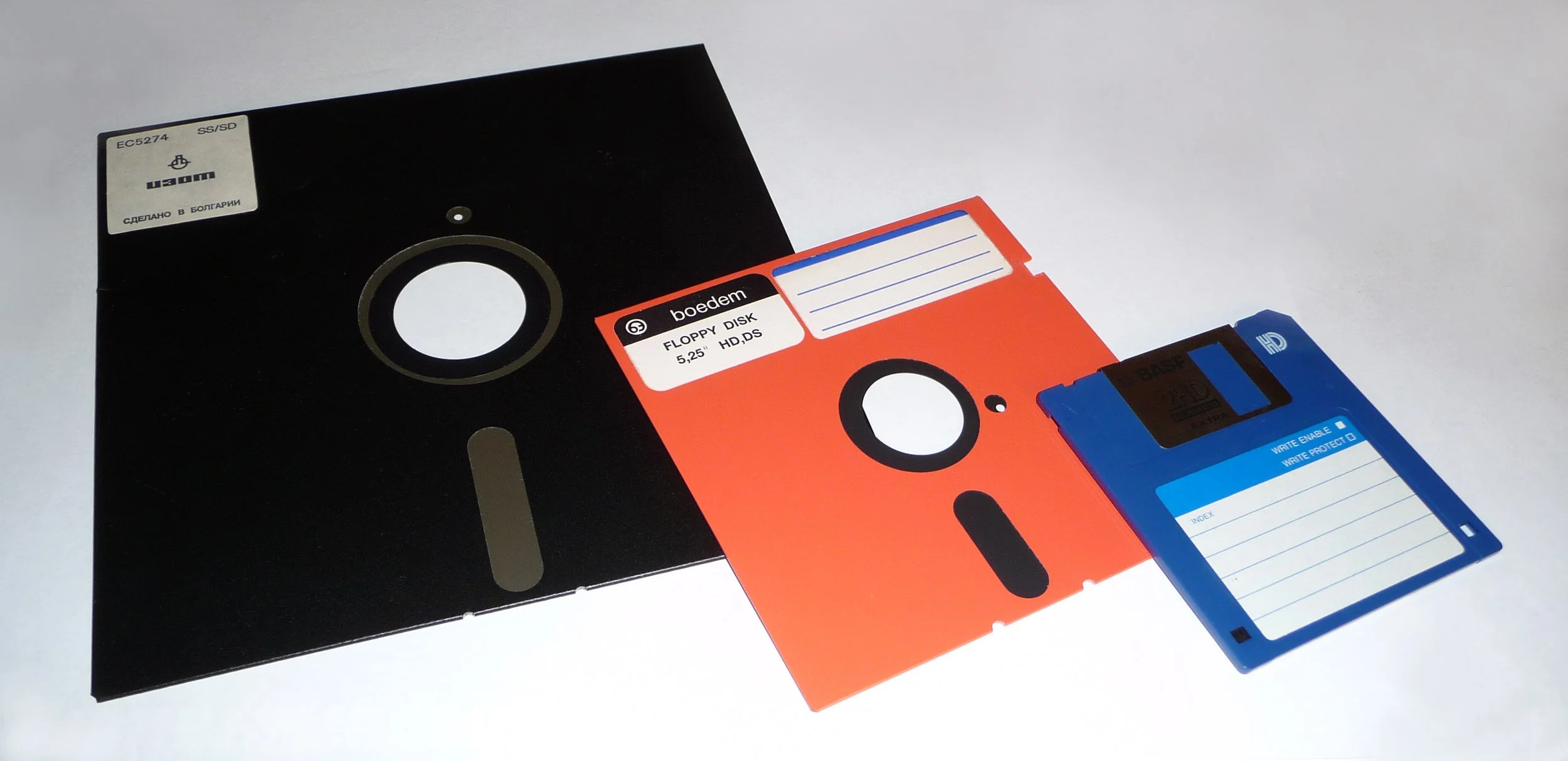
Three generations of floppy disks, photographed in 2009. The flexible magnetic medium remained inside even when the outer case became rigid.
That does not mean you need to feel antique. It means the museum has finally caught up with your stationery drawer.
Look at the three disks in the photograph. The broad black square, the smaller flexible envelope and the rigid little case are different answers to the same ordinary wish: let me take this work somewhere else. Which one feels familiar enough that your fingers remember what to do?
When a file had a physical address
IBM developed its early floppy system to load instructions and updates into large computers. The medium later became a practical way to distribute software and move files between machines. Before everyday networking, carrying a disk from computer to computer acquired the wonderfully literal nickname “sneakernet.”
The name leaves room for the human being in the system. Someone had to get up, find the right disk and carry it across the room. A handwritten label could be the difference between the report and last month’s report. The file had an address you could point to.
The Smithsonian’s record for a Verbatim minidisk is almost comically modest: a pink label, a pink cardboard sleeve, no indication of contents. It is not on display. The museum can describe the object, but that particular record cannot tell us what someone hoped to save on it.
Supply the part the label cannot
Here is a small prompt for an evening conversation or a page in a notebook: describe the first computer task that made you feel capable. Keep it specific. Printing a letter without ruining the margins counts. So does finally understanding where the file went.
Add three details: where you were, who helped, and what you were trying to make. If you remember an exasperating error message, it has earned a place in the account. You do not need the original machine to describe the experience.
This is an invitation to record a lived scene, not a contest over who used the oldest equipment. Someone else’s first computer may have arrived decades after yours. Ask what surprised them.
A museum label can tell us the dimensions of a disk. You can tell us why it was in your bag.
Keep exploring
Sources and image credit
George Chernilevsky, via Wikimedia Commons. Public domain.