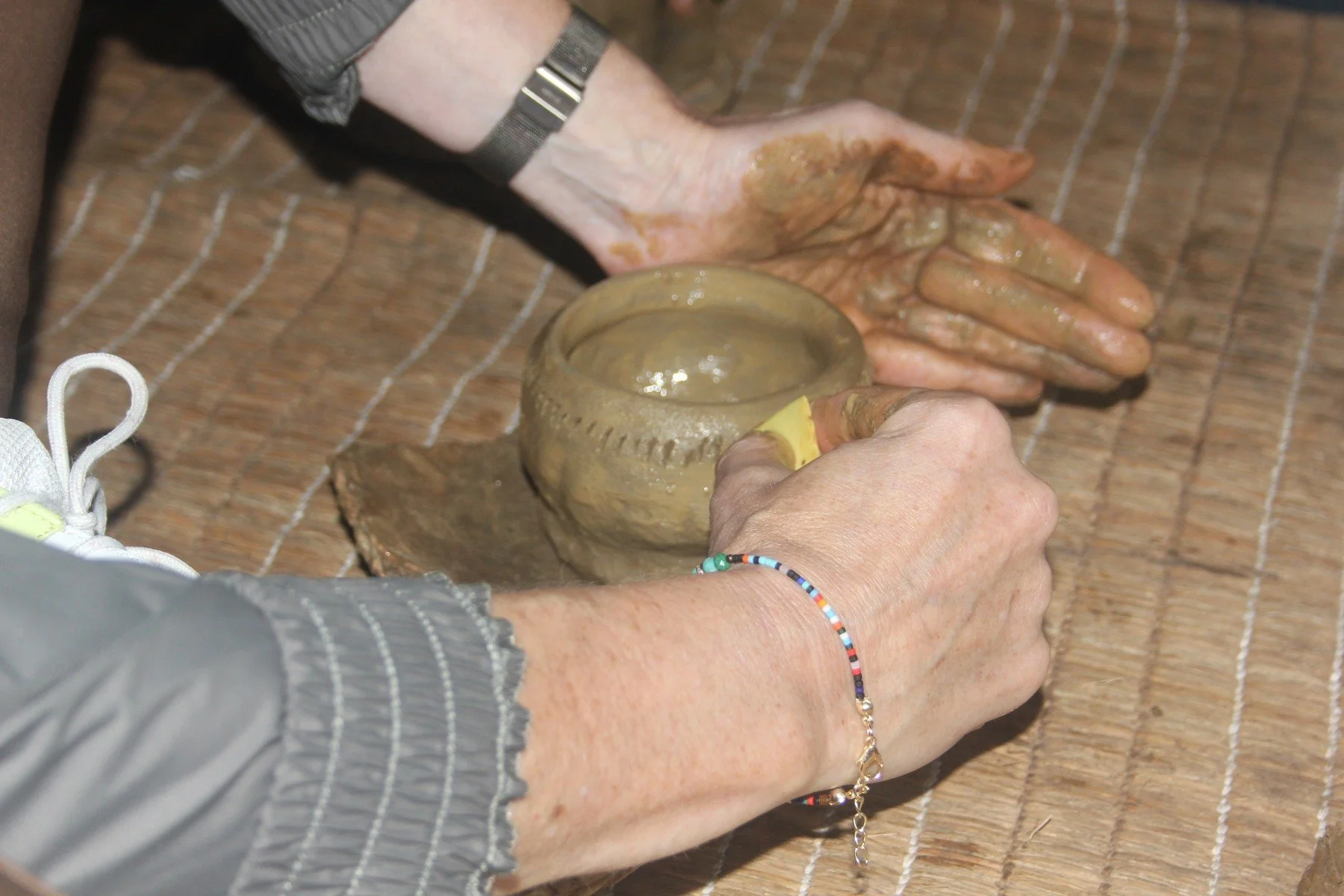
Why Handmade Can Feel Like More Than a Way to Make Something
A handmade bowl can hold soup. It can also hold a question: who spent time making this?
The second part is not a technical feature. It does not tell you whether the bowl fits in the dishwasher. Yet it may help explain why the word handmade sometimes changes how an object feels before we have even touched it.
In a 2015 paper, researchers Christoph Fuchs, Martin Schreier and Stijn van Osselaer reported four studies examining how descriptions of production affected product appeal. Handmade products benefited partly because participants perceived them as carrying the maker’s care or affection.
Context mattered. The preference was stronger when people considered gifts for loved ones than when they considered gifts for more distant recipients. The researchers also distinguished conveying affection from simply choosing the best-performing product.
This is evidence about consumer perceptions and choices in the studied settings. It does not prove that every handmade object contains more actual care, that every recipient prefers one or that a higher price measures love. A product description can suggest a story. It cannot certify a relationship.
Still, the finding offers an interesting way to think about making things. A modest object can have two jobs. One is practical. The other is to make somebody’s attention visible.
Imagine a friend who loves a very particular shade of blue. A small item chosen in that color may communicate recognition, whether it was made at a kitchen counter or found in a shop. The handmade research does not test that imagined exchange. It simply opens the door to noticing how much of a gift’s meaning can live outside its specifications.
That leaves plenty of room for the person receiving it. Someone may prefer a reliable store-bought tool, a secondhand book or nothing that needs dusting. Care includes paying attention to those preferences. Handmade is one possible language, not a requirement.
For the maker, there is room to stop confusing a meaningful offering with a flawless one. For the buyer, there is room to admire a craft without treating it as morally superior.
The interesting part is the human trace: somebody made choices, used their hands and brought a thing into the world. Sometimes that trace is what we want to give.
Sources
Fuchs, Schreier and van Osselaer, The Handmade Effect: What’s Love Got to Do with It?, Journal of Marketing 79(2), March 2015. DOI 10.1509/jm.14.0018. Primary research.
https://journals.sagepub.com/doi/10.1509/jm.14.0018
Technical University of Munich institutional research record. Abstract and study-scope cross-check; accessed November 6, 2026.
https://portal.fis.tum.de/en/publications/the-handmade-effect-whats-love-got-to-do-with-it/
Sources checked November 6, 2026.