The Boy Who Changed How Vanilla Is Grown
Behind a familiar flavor is a tiny flower, a practical breakthrough and a name worth remembering.
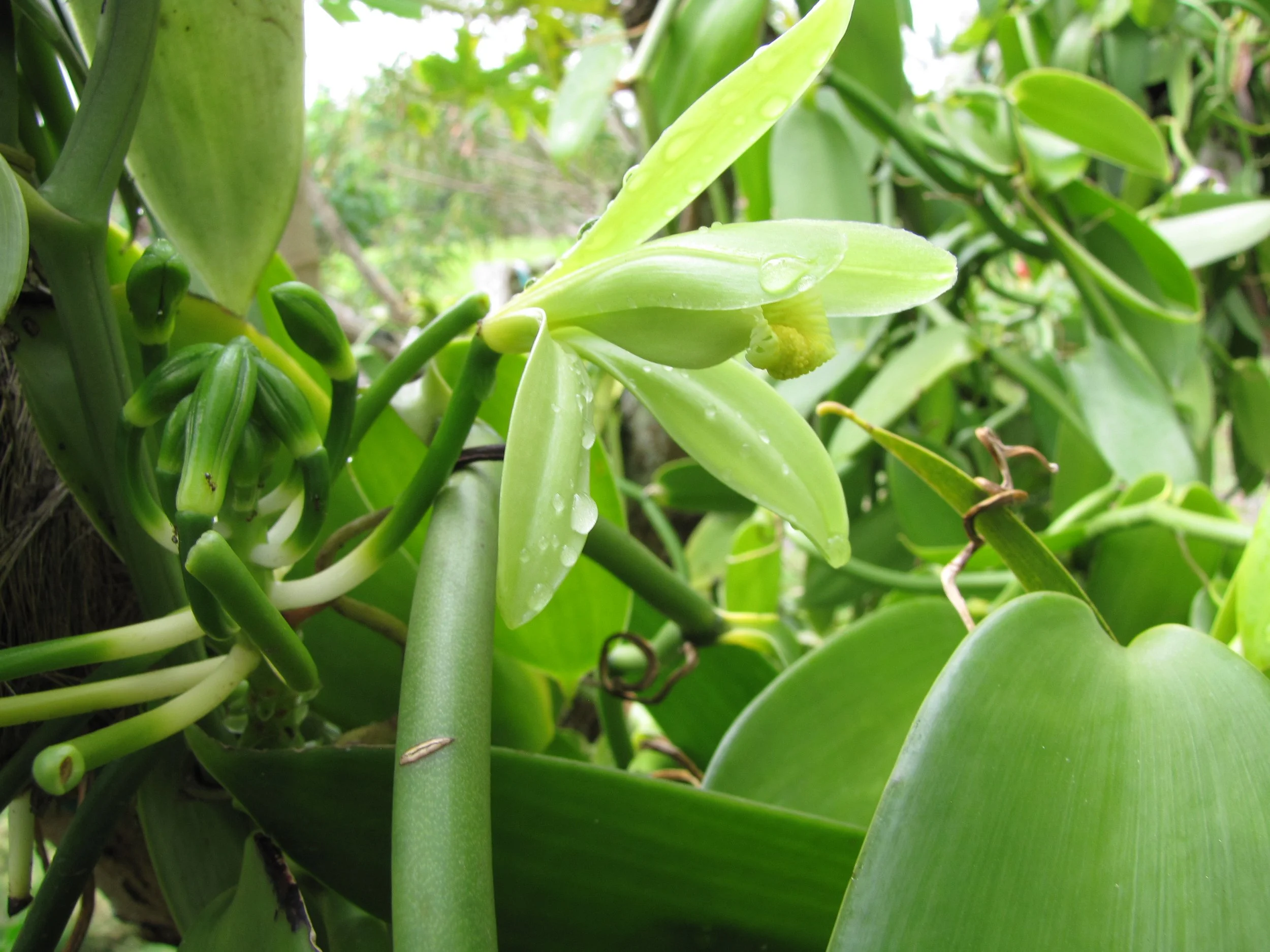
Vanilla is an odd choice for a word that means uninteresting. The flavor comes from an orchid, and a crucial part of its agricultural history belongs to a twelve-year-old boy. [V1, V2]
His name was Edmond Albius. In 1841, he was enslaved on Réunion, an island in the Indian Ocean. He developed an effective method of pollinating vanilla flowers by hand, a technique that helped transform vanilla cultivation. [V1]
The difficulty was inside the flower. In Vanilla planifolia, a small barrier called the rostellum separates the pollen-bearing part from the stigma, where pollen needs to arrive. Growing a healthy vine was not the same thing as getting it to produce the long fruits we call vanilla beans. [V1, V2]
Albius used a small piece of bamboo to lift that barrier and bring the flower’s reproductive parts together. It was a precise solution to a precise problem: move the obstruction, transfer the pollen. The Smithsonian identifies his method as one still used today. [V1]
He was not the first person ever to investigate hand-pollination of vanilla. The Linnean Society describes earlier work by the Belgian botanist Charles Morren. Albius’s contribution was a practical method that could be taught and used in cultivation. Giving him credit does not require erasing everyone else. [V3]
Nor does recognizing the achievement require turning his life into a comforting success story. He was not directly compensated for the innovation. The industry benefited from knowledge produced by a child who did not have freedom over his own life. [V1]
What deserves our attention is both the ingenuity and the person. A familiar ingredient can make the work behind it disappear: the plant becomes a flavor, the flavor becomes a bottle, and the bottle becomes something we reach for without thinking.
The next time a recipe calls for vanilla, there is another name to remember alongside the ingredient: Edmond Albius.
Source and Interesting Reading
V1: Smithsonian NMAAHC historical account supports age twelve, 1841, slavery, Réunion, rostellum, bamboo technique and lack of direct compensation. V3: Linnean Society, October 16, 2019, supports earlier work by Morren and the practical distinction of Albius’s method. V2: Kew institutional record identifies the orchid and fruit; direct retrieval blocked, indexed botanical record checked. Do not repeat the Linnean source’s claim that only one Vanilla species is cultivated. The article makes no such claim. Naming the contributor is editorial perspective, not a study result.
V1 | Smithsonian National Museum of African American History and Culture, Edmond Albius, Horticulturist. Age, year, method and lack of direct compensation. | https://www.searchablemuseum.com/edmond-albius-horticulturist/
V2 | Royal Botanic Gardens, Kew, Vanilla. Orchid and fruit background; indexed institutional record consulted. | https://www.kew.org/plants/vanilla
V3 | Leanne Melbourne, Edmond Albius: the boy who revolutionised the vanilla industry, Linnean Society (2019). Earlier pollination work and distinction of Albius’s contribution. | https://www.linnean.org/news/2019/10/16/edmond-albius