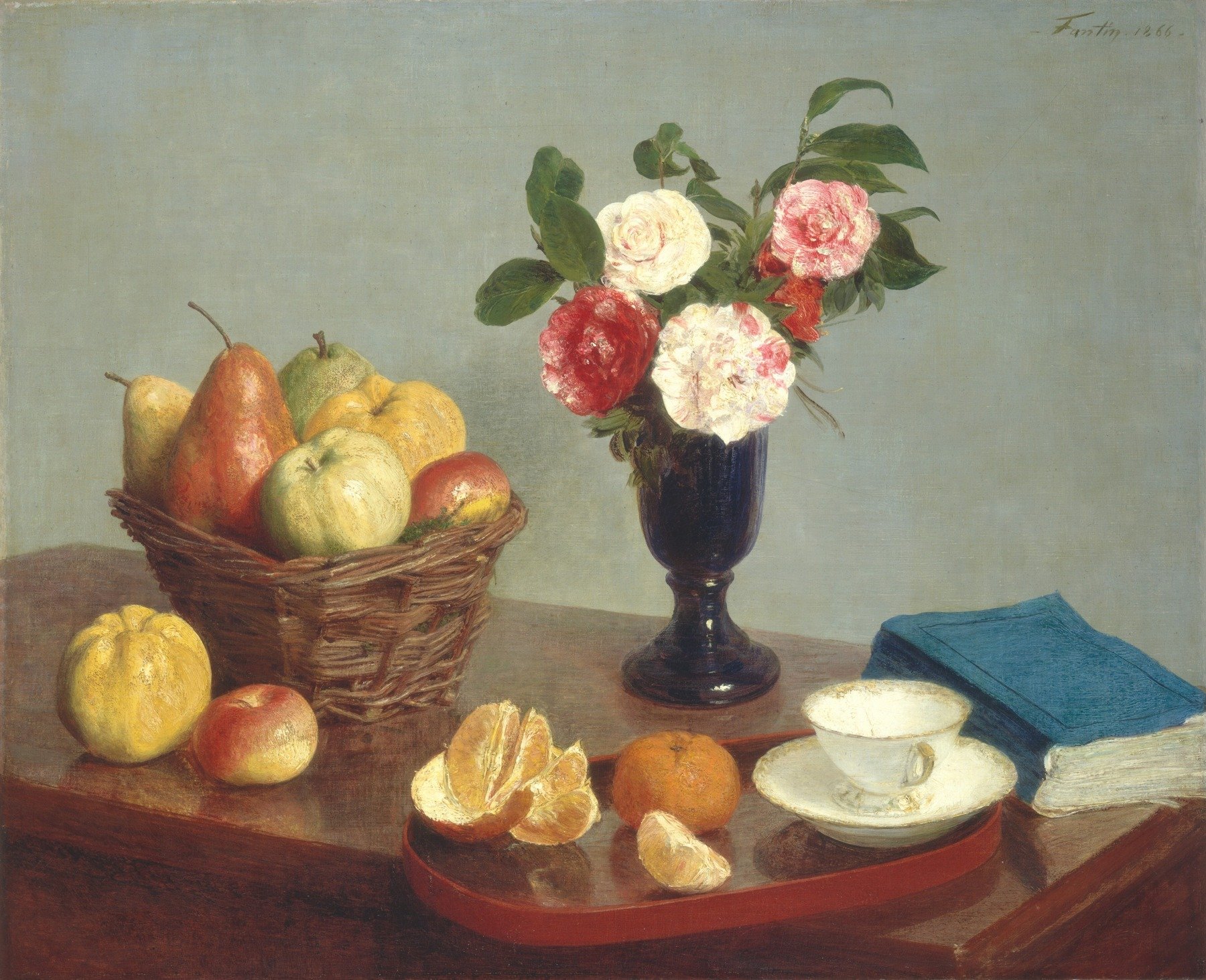
To begin looking at art, describe one thing you can actually see, follow it through the work, then ask what makes you think or feel as you do. You do not need to identify the period, decode a symbol or arrive at the artist's intended meaning before the picture is allowed to interest you.
A museum label can be helpful. It can also become the place we look when we are afraid of looking incorrectly. There is the painting, enormous and available. There we are, reading a small rectangle about it.
Let your eyes get there first
Choose one work, in person or in a good online image. Spend a little time with it before reading the description. MoMA and the Smithsonian both offer slow-looking activities that invite close attention rather than a race through objects.
Here is an MCE version to try with the painting above. First, find the largest shape. Then find the smallest detail that interrupts it. Finally, notice a color that appears in more than one place.
That is observation. 'The vase feels lonely' is an interpretation. Both belong in your experience, but they do different jobs. You can ask what in the picture gave you that feeling without declaring that the artist secretly meant loneliness.
Change one thing about how you look
Move your attention from the center to an edge. Look at the space between two objects. If you are in a gallery, change position where permitted, keeping your distance from the work. On a screen, enlarge the image if the resolution supports it.
You might discover that the background is doing more work than the subject. You might decide that the color you liked at first now feels too loud. Changing your mind is a perfectly good result of paying attention.
Now read the label. A material, date or title may change the experience again. Keep your own first response alongside that information instead of erasing it.
Leave with one detail
If you are with someone, trade observations before opinions: 'I keep coming back to that yellow spot.' It gives the other person somewhere specific to look.
You do not owe the painting admiration. You may still dislike it. But you have had a more interesting encounter than checking whether you recognized the name.
Next time, you can begin with the small yellow spot.
Keep exploring
Sources and image credit
Henri Fantin-Latour, Still Life, 1866. National Gallery of Art, Chester Dale Collection. Public domain. View the artwork and image record.