El Niño can change the odds of winter weather patterns across the United States, but it cannot tell you whether a particular town will have snow on a particular Saturday. NOAA’s November 12, 2026 discussion reports El Niño strengthening, with a greater than 79 percent chance of a strong-to-very strong event through January–March 2027. That is a forecast of the climate pattern’s strength, not a 79 percent chance of a storm at your address.
A large Pacific Ocean headline can arrive in the same morning as a much smaller question: should we change the weekend trip?
The two are connected, but they need different kinds of information.
What the winter outlook is saying
NOAA’s outlook for December 2026 through February 2027 favors warmer-than-average conditions across the northern United States and wetter-than-average conditions across the southern United States and Eastern Seaboard. These are seasonal tendencies. A favored category is not a promise that every day will match it.
El Niño involves unusually warm surface waters in the tropical Pacific and changes in the atmosphere that can influence weather farther away. Its influence helps forecasters assess possibilities. Other conditions still matter, and NOAA explicitly cautions that even a strong event does not guarantee the associated impacts.
Match the information to the decision
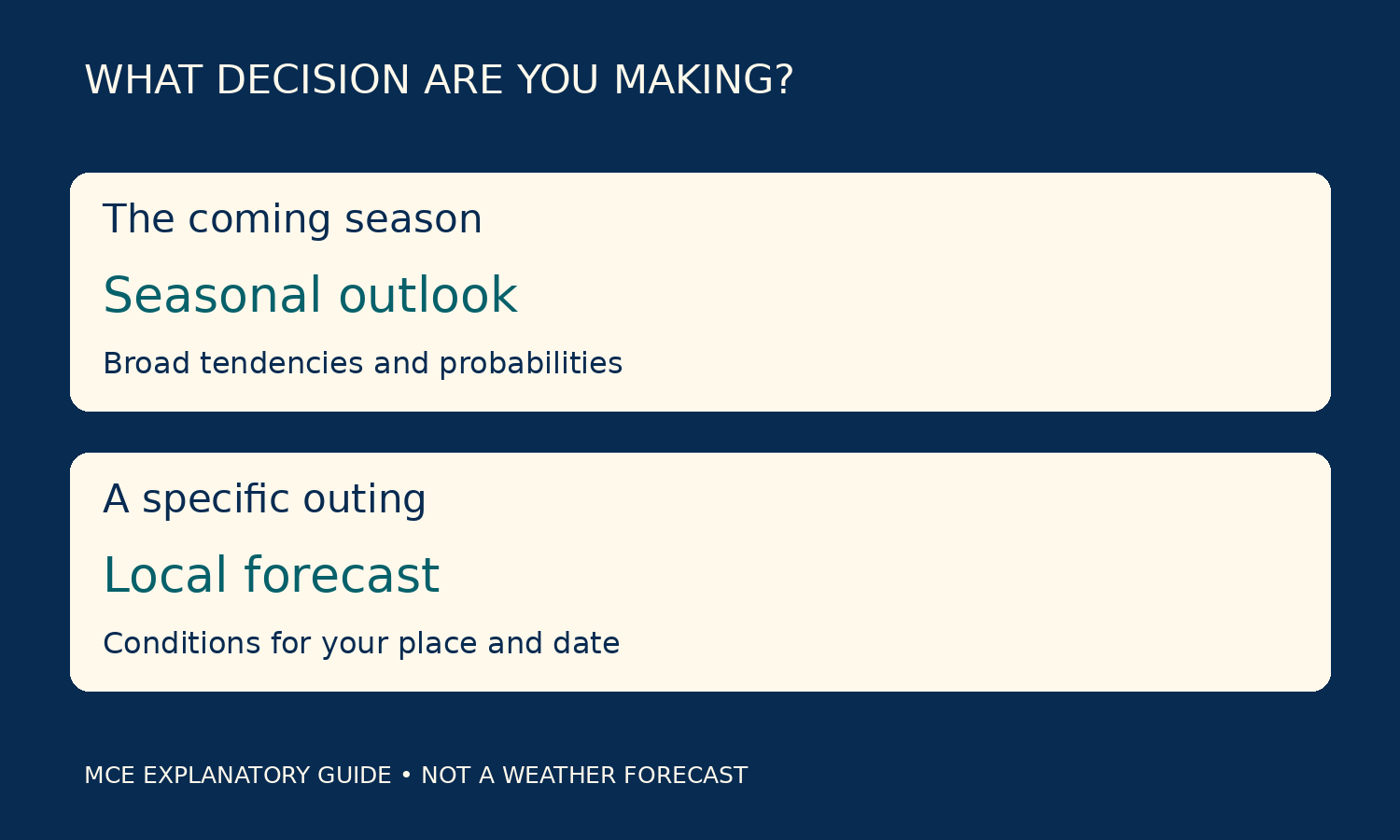
For a question about the coming season, read the dated seasonal outlook and its explanation. For a specific outing, check the National Weather Service forecast for the destination as the date approaches. For a road journey, also check the relevant transportation agency’s route conditions. An outlook covering several months cannot settle whether a mountain pass is suitable for travel that morning.
Here is a practical way to keep the information useful: write the decision next to the forecast. “Choose a flexible travel date” and “decide whether to drive tomorrow” are different decisions. The first may benefit from broad planning. The second needs current local information.
You do not have to rearrange the calendar because a headline contains a dramatic adjective. You also do not have to ignore a meaningful climate signal. Let the seasonal outlook inform your preparation, then let the local forecast help with the actual day.
Reporting checked November 16, 2026. Recheck the linked official outlook before making time-sensitive plans.
Keep exploring
Understand the wording of a winter alert
Explore the Freedom neighborhood
Sources and image credit
NOAA CPC: ENSO Diagnostic Discussion, November 12, 2026
NOAA: U.S. Winter Outlook 2026–27
National Weather Service local forecasts
Original MCE explanatory diagram, created for this package. No external image components. Not NOAA artwork or a forecast.