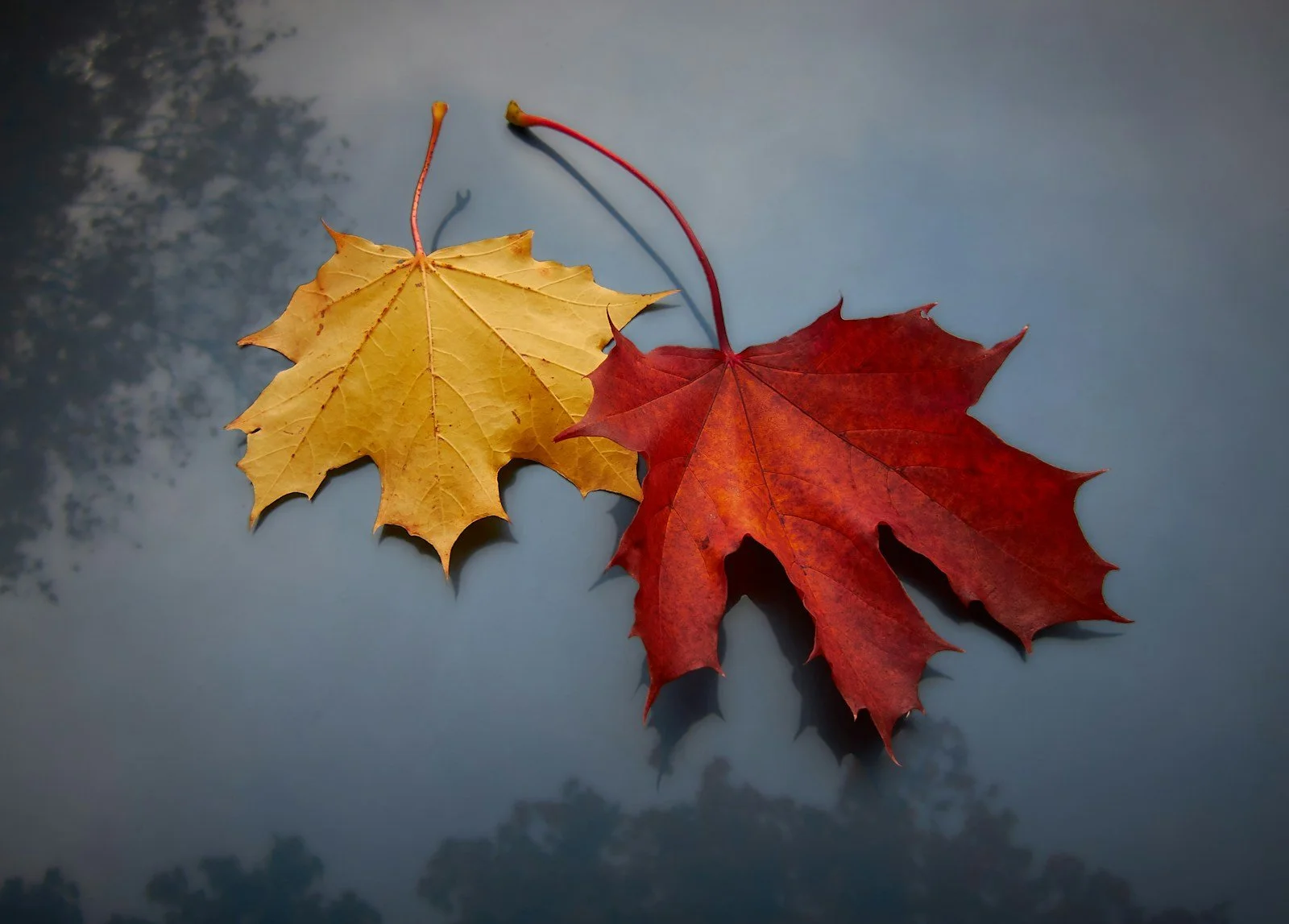
Freedom
Why Autumn Leaves Turn Red, Not Just Yellow
Imagine stopping beside a tree that has apparently decided subtlety is over. Yesterday it was part of the background. Today it is the reason you are late getting back from your walk.
Autumn color can look like one grand change: green leaves becoming something brighter. But yellow and red often arrive by different routes. Some color is being revealed. Some is being made.
During the growing season, chlorophyll gives leaves their dominant green appearance. Yellow and orange pigments called carotenoids are also present, but that green can mask them. As the days shorten and nights lengthen, many deciduous plants begin preparing for winter. Chlorophyll declines, and the colors it had obscured become visible. [A1]
The yellow leaf has not necessarily acquired a brand-new color. You are finally getting a better look at one it already had.
Red takes a different turn. Many species produce red and purple pigments called anthocyanins in late summer and early fall. As movement through the leaf's veins becomes restricted, sugars can accumulate and contribute to that pigment production. The resulting mix helps determine whether a leaf looks yellow, orange, red or purple. [A1]
So the familiar explanation that autumn simply uncovers hidden colors is only part of the story. It works well for the yellows. Those reds deserve their own introduction.
This also helps explain why a favorite tree does not deliver an identical performance every year. Weather influences the timing, intensity and duration of fall color. Sunny days and cool nights without frost can favor a vivid display. Drought can cause leaves to drop early, and a hard freeze can damage them before the show develops. Wind and heavy rain can shorten the viewing window. [A2]
The forecast is involved. It just does not take requests.
Different species also produce different combinations and amounts of pigments. A tree that turns a quieter yellow-brown has not failed autumn. It may simply have a different palette. [A1]
The next time you pass a changing tree, try looking at one branch before taking in the whole canopy. Notice the leaves that are still green, the ones beginning to yellow, and any showing red. You do not need to identify the tree correctly on the first try to enjoy noticing more about it.
A photograph taken from the same spot a few days later can make the change easier to see. It will record that particular tree in that particular stretch of weather, not tell you what every tree nearby will do. There is no universal date on which autumn is ready for its portrait.
And there is no requirement to turn a pleasant walk into a science assignment. You can know the pigment names, forget them by dinner, and still have gained something: the next bright leaf will look a little less ordinary.
That yellow was waiting for its moment. That red may be something new.
Sources and Additional Reading
A1 Cynthia Haynes and Aaron Steil, The Science Behind Fall Color. Iowa State University Extension and Outreach. Last reviewed October 2026; original publication date not displayed. Authoritative horticultural explanation. [https://yardandgarden.extension.iastate.edu/how-to/science-behind-fall-color] Read source
A2 NOAA, Cool autumn weather reveals nature’s true hues. October 1, 2014. Authoritative weather context, not a 2026 foliage forecast. [https://www.noaa.gov/stories/cool-autumn-weather-reveals-nature-s-true-hues] Read source