
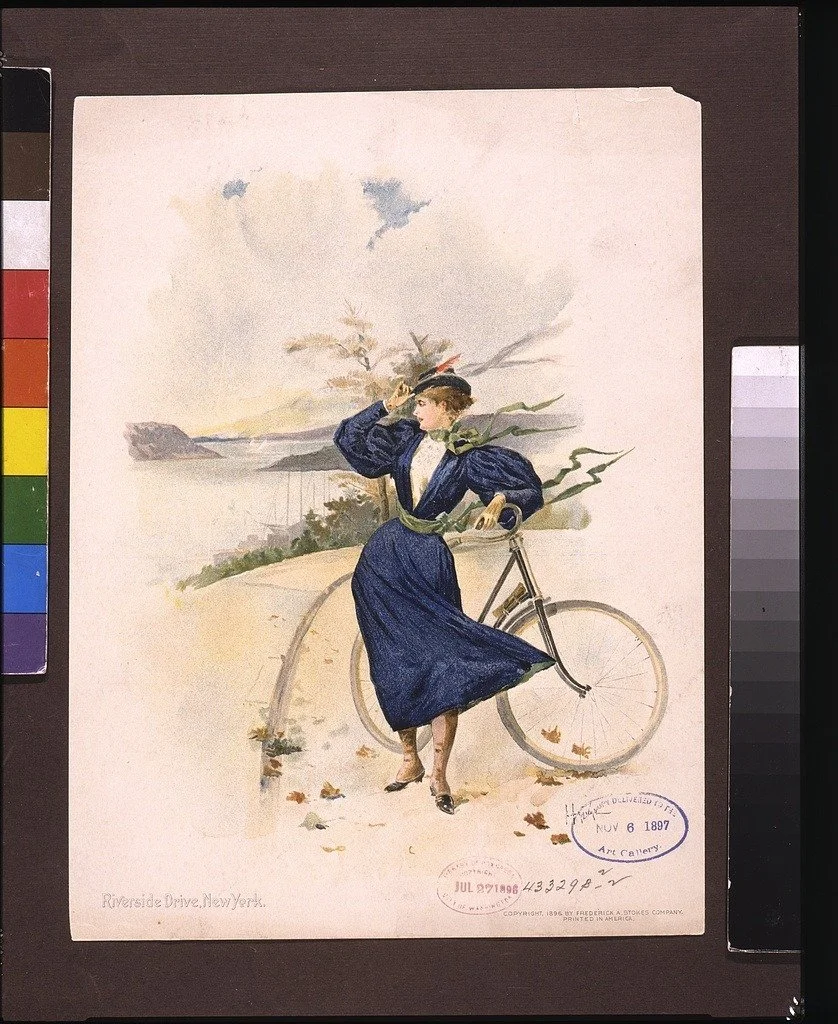
When Freedom Came With Two Wheels
For women in the 1890s, a bicycle offered something bigger than a pleasant ride: a way to go.
Imagine having somewhere you want to go and, for once, being able to get yourself there. No elaborate travel arrangement. No need for someone else to provide the ride. Just your own effort moving you down the road.
For many American women during the bicycle boom of the 1890s, that possibility was part of the attraction. The bicycle offered recreation, but it also expanded personal mobility. Its importance went beyond transportation: it became part of the wider story of women’s independence.
## The practical side of independence
A bicycle is a particularly visible kind of self-reliance. The rider supplies the power, steers and chooses when to stop. In a society that placed restrictions on women’s behavior and movement, a woman confidently riding through public space made an impression.
That does not mean a bicycle erased legal inequality or made independence equally available to everyone. It means an ordinary object could change an ordinary day. That is a meaningful kind of freedom, too.
Cycling even pushed against what women were expected to wear. Long, heavy clothing was poorly suited to the task. The cycling craze strengthened the rational-clothing movement. Some women wore bloomers, while many chose skirts that were a little shorter. The change did not have to look the same on every rider to be useful.
## Learning something that belongs to you
In 1895, Frances Willard published an account of learning to ride. It is an appealing detail in this history: the bicycle was not simply a symbol printed on a poster. It was a skill women actually had to learn.
There would have been wobbling before confidence. A stretch of road that felt difficult before it became familiar. The machine could offer mobility, but the rider had to discover what she could do with it.
We often talk about freedom in grand terms, and sometimes we should. But this chapter of history also gives us a smaller, vivid image: a woman getting on a bicycle and going somewhere under her own power.
The destination matters. So does the fact that she gets to choose it.
SOURCES
[1] Smithsonian National Museum of American History: Wheelwoman Louise rolls into the museum
https://americanhistory.si.edu/explore/stories/wheelwoman-louise-rolls-museum
[2] Library of Congress: Women and Bicycles research guide
https://guides.loc.gov/bicycles-cycling-history/subject/women
[3] Smithsonian: Women on the move
https://americanhistory.si.edu/explore/exhibitions/object-project/online/bicycles/sheet-music
IMAGE CREDIT
Library of Congress, Prints & Photographs Division, LC-USZC4-13971. No known restrictions on publication.
