Dementia is a term for a decline in thinking abilities that interferes with everyday life. It is not one specific disease, and it is not an inevitable part of aging. Alzheimer’s disease is its most common cause, but dementia can involve attention, judgment, communication and other abilities as well as memory.
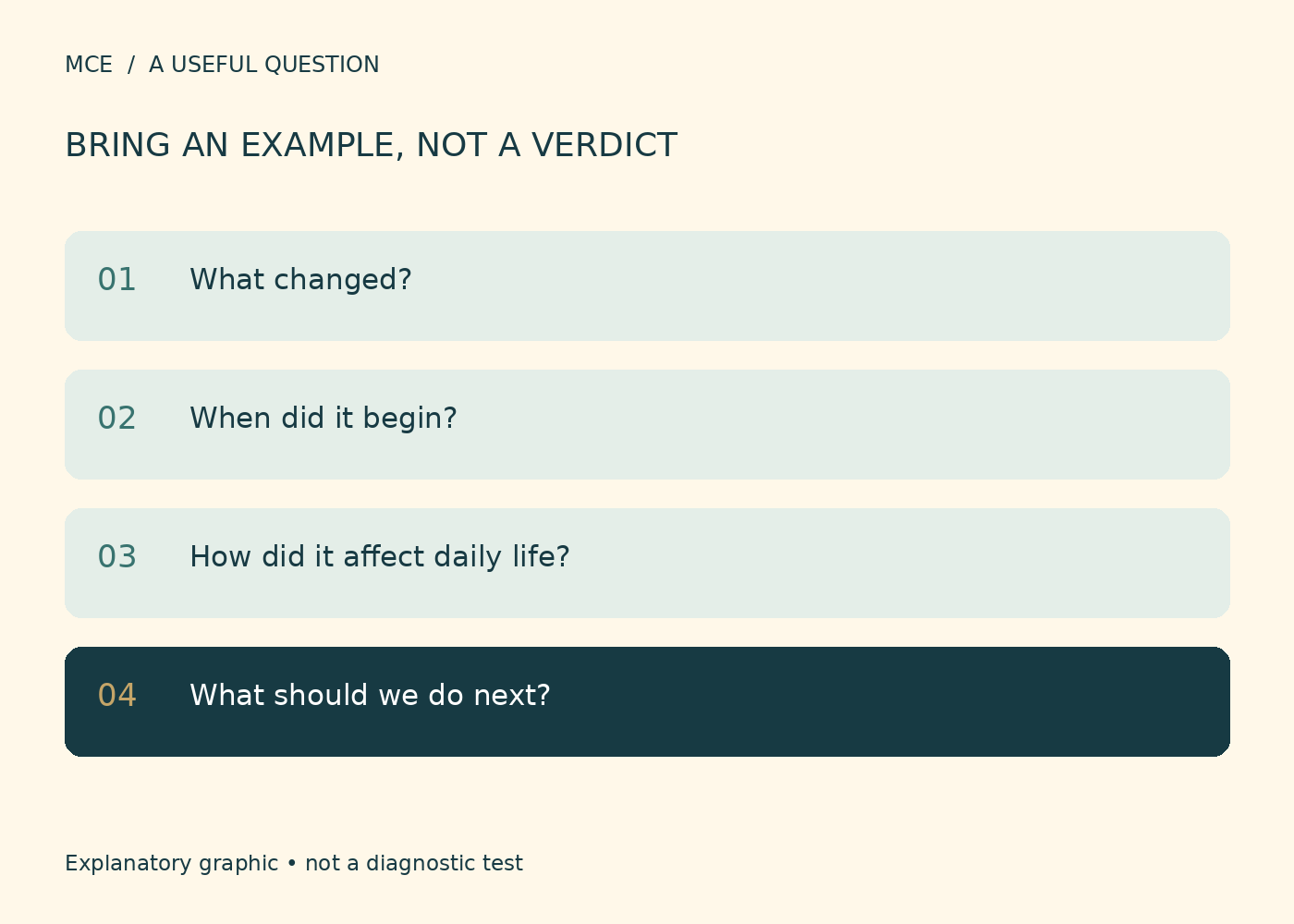
Original MCE explanatory graphic. A conversation aid for a routine appointment, not a memory test. Sudden confusion needs emergency medical help.
If you searched the word after a troubling moment, begin with that distinction. A search result cannot diagnose the person you are worried about. It can help you decide what to notice and what to ask next.
Look at the effect on daily life
CDC distinguishes occasional memory slips, such as temporarily misplacing keys or finding a word later, from changes that disrupt ordinary functioning. Getting lost in a familiar neighborhood or struggling to complete familiar tasks independently deserves a conversation with a healthcare professional.
The distinction is not a home scoring system. One anecdote does not establish a diagnosis, and a tidy checklist cannot capture someone’s whole life. What matters is taking a concern seriously enough to have it assessed without turning every lapse into proof of decline.
Some memory problems have treatable causes, including medication effects, vitamin deficiencies or thyroid problems. A clinician can investigate the cause. That is one reason to seek an assessment rather than assuming the answer must be dementia or dismissing a persistent change as age.
Sudden confusion is different from a gradual concern. Seek emergency medical help if someone becomes confused suddenly; do not wait for a routine memory appointment.
Bring an example, not a verdict
For a non-urgent appointment, try making a short, factual note: what changed, when you first noticed it, whether it has happened again, and how it affected an ordinary task. Include current medicines and supplements. These notes are an aid to conversation, not a diagnostic test.
“I’m worried about your memory” can be hard to answer. “You said the familiar route felt confusing twice this month; would you like help arranging a visit?” gives the person something concrete to discuss. Adapt that wording to your relationship. Leave room for their own account and ask before taking over arrangements.
A useful appointment question is: “What possible causes are you checking, and what should we do next?” Another is: “What changes would mean we should seek help sooner?” Write down the plan so nobody has to remember every detail of a stressful conversation.
The person remains a person with preferences, history and a voice in what happens next. Clear information can make room for those things while a medical team works out the cause.
Keep exploring
Sources and image credit
MCE Research & Publishing. Original explanatory diagram, November 24, 2026.
Original diagram based on the sources listed below.