If you are returning to piano after 45, you do not have to resume at the page where your childhood lessons stopped. Start with one thing you want to play now. A familiar melody, an accompaniment to your own singing, or a few comfortable chords can give the return a shape that belongs to your adult life.
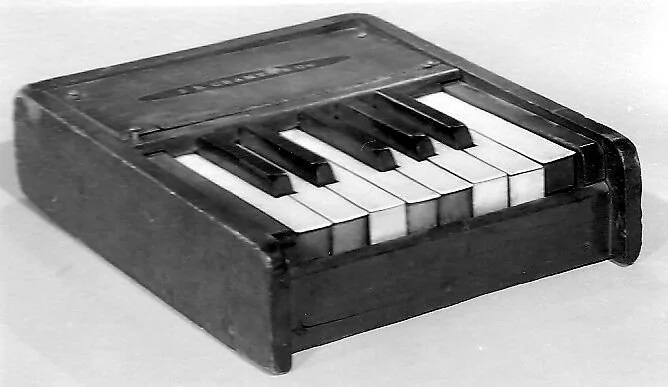
Practice Keyboard, ca. 1870–96. The Met, object 1976.8.25.
Perhaps the last person who heard you practice was a parent calling from the kitchen. Perhaps you remember the exam piece but have forgotten what made you want to play. Those are different starting points. Neither requires pretending the intervening decades did not happen.
There has always been a backstage
The curious object pictured here is a practice keyboard from about 1870–96, held by The Metropolitan Museum of Art. Its materials are wood, metal and celluloid. The museum classifies it as an accessory to a stringed instrument.
What makes it interesting is the attention given to practice itself. The grand performance is not the only part of music that people have made objects for. There is also the private work, which rarely gets an audience.
Describe the musician you want to be
Before contacting a teacher, finish this sentence: “I would enjoy being able to…” Keep the answer specific. Playing a hymn at home calls for a different conversation from working toward a graded examination. Both are legitimate. So is wanting to understand the chords in a song you love.
Tell the teacher how long you have been away, what you remember, what instrument you can use, and what fits your present schedule. Ask whether they work with adult returners and whether a short introductory session is available. You are gathering information, not auditioning for permission.
For your own first session, choose a small passage and leave time to listen. Notice where you stop, rather than declaring the entire ability gone. Take that exact question to the lesson: “I can find the notes, but I lose my place here.” It is easier to work with a location than a verdict.
At the end, put a small mark beside where you want to begin next time. You have enough adult administration already. The piano can have a very short agenda.
Keep exploring
Sources and image credit
The Metropolitan Museum of Art. The Crosby Brown Collection of Musical Instruments, by exchange with The New York Public Library, 1976. Public domain.