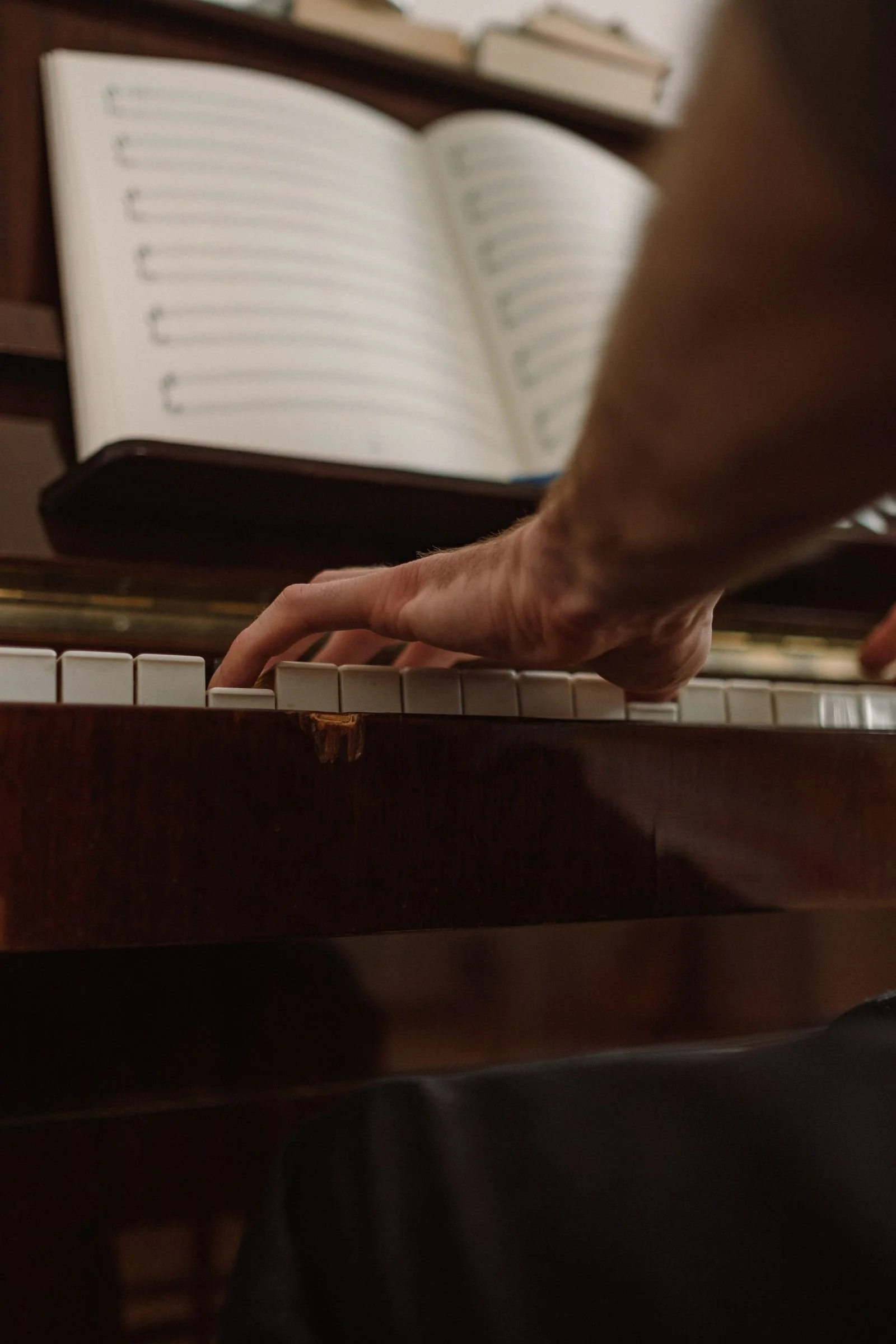
Yes, adults can learn piano later in life. A study of 156 healthy older adults, averaging about 69 years old and with no more than six months of lifetime musical practice, found that participants could develop musical abilities during a year of structured learning. It does not promise a concert career or prove that lessons prevent dementia. It does give the idea that you missed your chance a useful complication. [1]
At 45, 55 or 70, the awkward part may be less about the piano than about introducing yourself as a beginner. You can run a household, manage complicated work and understand a mortgage. Then the left hand refuses to participate in a perfectly reasonable musical arrangement.
That is a lesson problem. It does not need to become a life verdict.
Start with the music you actually want
Before you compare keyboards, name a small musical wish. Perhaps you want to play the beginning of a song you love, accompany a simple melody or understand what those black marks on the page are asking you to do.
Tell a prospective teacher the wish, your experience and your available time. Ask whether they teach adult beginners, what equipment you would need between lessons, and how they adapt when a student finds a movement uncomfortable. A trial lesson can answer questions that another month of reading instrument reviews cannot.
What the research does and does not say
In the study, one group practiced piano while another took music-culture classes. Their improvements differed across skills. Learning music was not a single all-or-nothing ability that people either possessed or lacked. The study involved selected healthy older volunteers; its results cannot predict your individual progress. [1]
You can take encouragement from that without turning your hobby into a brain-health prescription. Enjoying the sound is already a reason to try.
Give the first month a modest job
Here is an MCE suggestion: use the first few lessons to discover whether the teacher, instrument and practice routine suit you. Keep one note after each session: something clearer, something difficult, something you want to hear again.
You are collecting information, not grading your potential. If the lesson feels rushed or belittling, look for a better fit. If you like it, repeat the manageable part. There is room between buying a grand piano and deciding you are too old to touch a key.
Somewhere in the middle is a person learning a few notes after dinner. That person is allowed to be you.
Keep exploring
Explore starting something new →
Discover the surprising work of your ears →
Research references & image credit
Photograph by cottonbro studio / Pexels, used under the Pexels license. Illustrative piano practice scene.