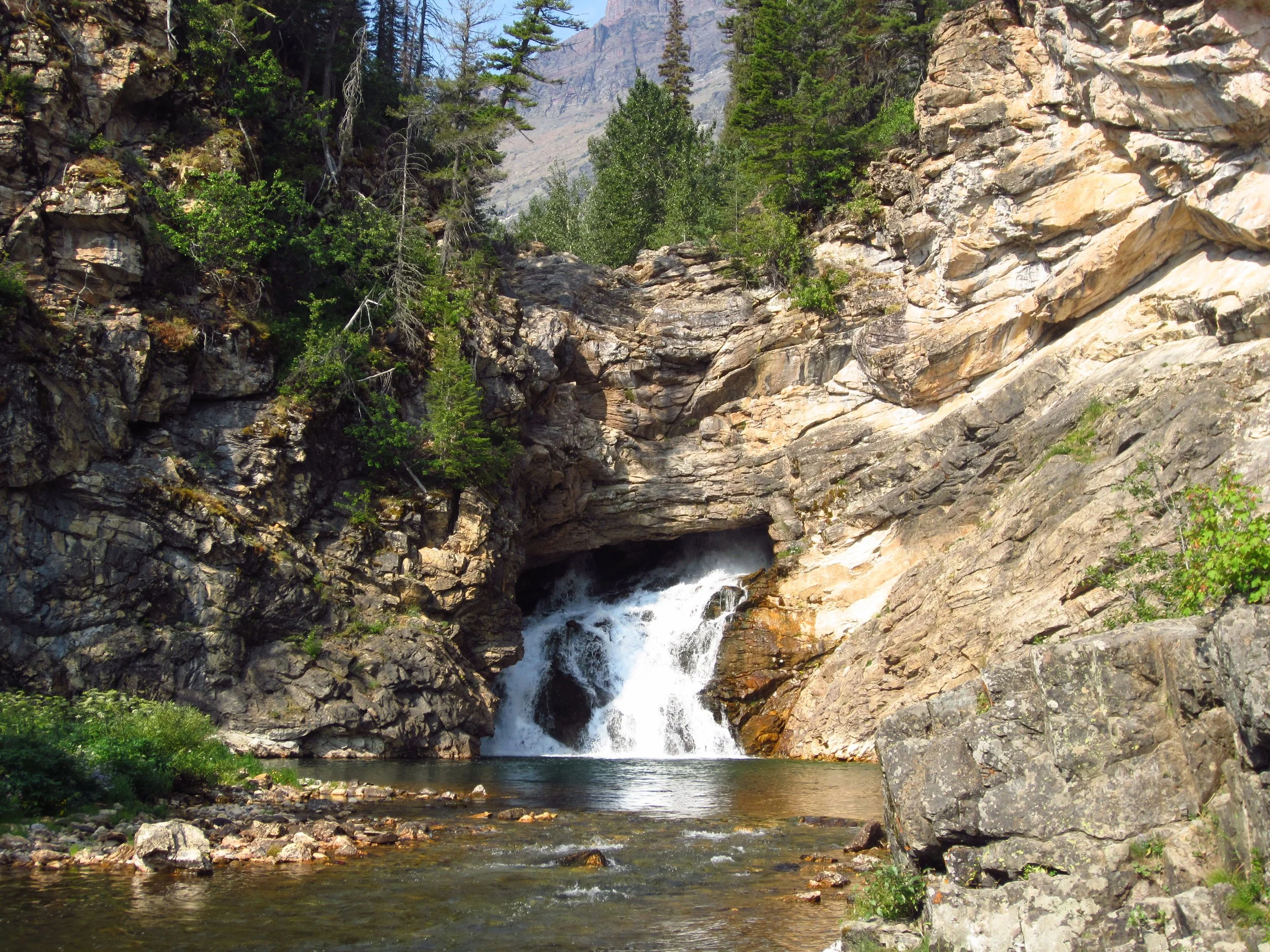
A photograph of a waterfall has one obvious omission. It cannot make a sound.
It can show the drop, the spray, the green around the edges. But the rumble that arrives before the waterfall comes into view belongs to another part of the place. So does the smaller trickle beside the path. We can bring home a beautiful picture and leave an entire layer of the visit behind.
The National Park Service takes that layer seriously. Its work includes protecting acoustic resources: the sounds associated with a place, from wind and wildlife to sounds connected with its cultural history. [1]
There is a useful distinction in the agency's terminology. The acoustic environment is the sound present in an area. A soundscape is how a person perceives that environment. One describes what is there; the other includes the listener. [1]
Imagine two people beside the same stream. One follows the water's continuous rush. The other notices the intermittent tapping somewhere beyond it. Neither needs to be doing the visit incorrectly. Attention has simply found a different route through the scene.
This is also something researchers can examine. NPS scientists record park sounds and sound-pressure levels. Technicians use spectrograms, visual displays organized by frequency, time and loudness, to help analyze the recordings. They also listen to identify sources such as wildlife, weather and human activity. [2]
It is a lovely reversal: sometimes understanding a place means making a picture of its sound.
You do not need recording equipment to try the visitor-sized version. From a safe, comfortable spot, listen for one continuous sound and one that comes and goes. Then notice which seems near and which seems farther away. There is no score, and no requirement to identify the bird that has declined to introduce itself.
This is an invitation to notice, not a promise that a minute outdoors will change your health or your mood. Nor does an interesting soundscape have to be silent or free of people. A place can carry cultural sounds as well as natural ones. [1]
For a listening visit from home, the NPS Sound Gallery offers recordings organized into categories including birds, water, insects and weather. The clips let you explore individual sounds without pretending that a recording is the whole experience of being there. [2]
Keep taking pictures. They can be wonderful. But occasionally leave a little room in the visit for the part of the landscape that will never fit inside the frame.
Sources & further reading
1. National Park Service, Natural Sounds reference manual, Introduction. Updated June 18, 2024; accessed October 26, 2026. Definitions in section 1.3.
https://www.nps.gov/subjects/sound/rm47-1-introduction.htm
2. National Park Service, Sound Gallery. Updated September 3, 2025; accessed October 26, 2026. Recording methods and listening collection.