
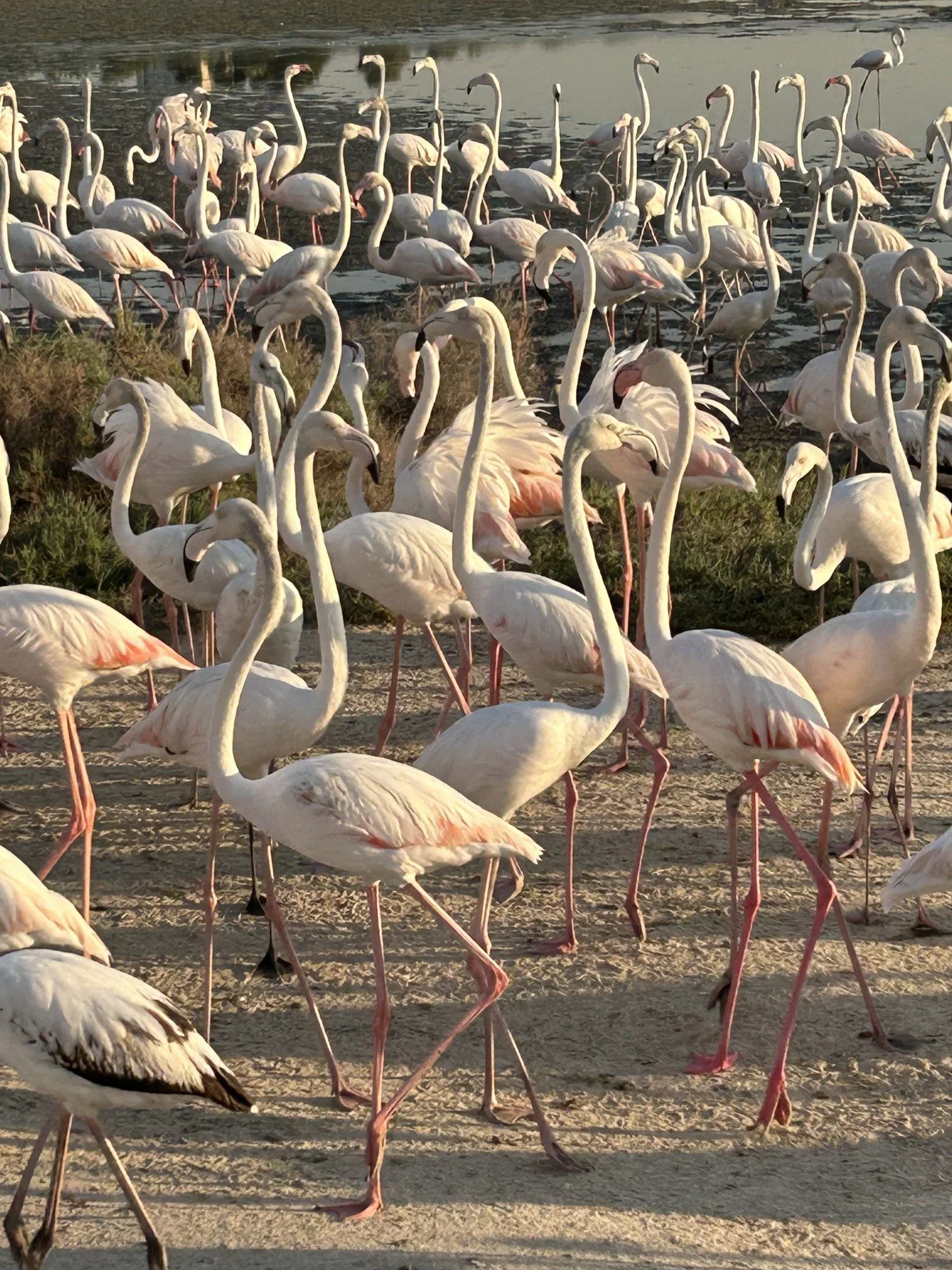
A Flamingo’s Pink Begins Somewhere Else
The flamingo gets the compliments. The algae deserve a mention.
That famous pink begins with pigments in the food web. Carotenoids, a family of natural pigments, occur in algae eaten by flamingos and by some of the small animals they consume. The birds process those dietary pigments, and the results help color their feathers.
The short version is often that flamingos eat shrimp. The fuller version is more interesting: the shrimp are part of a chain, not the entire explanation. Algae can be both a direct meal and an upstream source of pigment.
A flamingo chick does not arrive dressed like the adult on a lawn ornament. Chicks have gray or whitish down. Their familiar color develops as they grow and replace feathers. The Natural History Museum explains that the dietary pigments are processed in the liver and contribute to coloration in feathers, bills and legs.
Even among adults, pink is not a single paint sample. Diet helps influence the shade. The photograph above is a useful reminder to look at the actual birds: pale feathers, brighter patches and different tones can occupy the same frame.
Their feeding equipment is equally worth noticing. According to the Smithsonian’s National Zoo, flamingos feed with their heads inverted in shallow water. Their tongues help move water through bills lined with filtering structures that retain food. A bird that looks almost extravagantly decorative is operating a rather specialized dining system.
None of this makes an individual photograph a dietary report. You cannot identify everything a bird has eaten by glancing at its feathers. The useful discovery is the connection, not a shortcut for diagnosing a flamingo.
It is tempting to turn that connection immediately into a lesson about human life. But the bird does not need to do motivational work for us. The biology is already good company.
A color that appears to belong entirely to one animal carries a history of other organisms, feeding and growth. Pink is the visible ending of a longer story.
The next time a flamingo catches your eye, there is more than a color to admire. There is a food web standing on two very long legs.
Sources
Smithsonian’s National Zoo, Why Are Flamingos Pink? And Other Flamingo Facts, June 29, 2021. Authoritative zoo explainer; accessed November 6, 2026.
https://nationalzoo.si.edu/animals/news/why-are-flamingos-pink-and-other-flamingo-facts
Natural History Museum, Rainbow nature: life in proud pink, Hayley Dunning and Lisa Hendry. Undated explainer; accessed November 6, 2026.
https://www.nhm.ac.uk/discover/rainbow-nature-life-in-pink.html
Sources checked November 6, 2026.
